
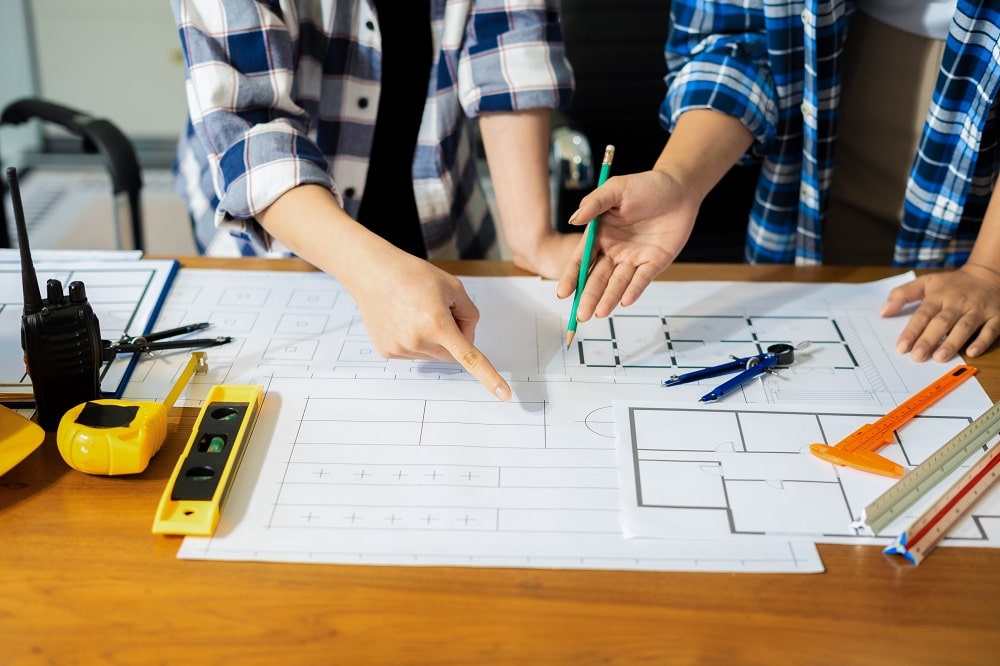
To plan for future home expansion in New Orleans during initial construction, design a “larger” house with logical, non-load-bearing break points for additions, and pre-plan structural elements like foundation, plumbing, and electrical for future expansion. Consider designing for vertical growth (upstairs) by mapping out staircase locations early and ensuring the foundation can support more weight.
Most homeowners think about what they need right now when building a new home. A smarter approach is thinking about what you will need five or ten years from now while the walls are still open and the foundation is still being poured. The decisions made during initial construction determine how difficult and expensive any future expansion will be.
Big Easy Contractors is a locally owned general contractor serving New Orleans and the surrounding areas, with experience in everything from new construction and home renovation services to roofing, concrete, and HVAC. If you are building a home and want to make sure it is ready for the future, get a free estimate.
Why Should You Plan for Future Home Expansion During Initial Construction?
Planning for future expansion during initial construction saves thousands of dollars by avoiding repeat foundation work, torn-out walls, and utility re-runs. A home addition typically costs $80 to $200 per square foot, according to Angi, but costs rise sharply when structural and mechanical systems need to be redone because the original build did not account for future growth.
Retrofitting a New Orleans home that was not designed for expansion is one of the most expensive mistakes homeowners make. Cutting through finished walls, reinforcing an undersized foundation, and rerouting ductwork through finished ceilings all cost far more than simply getting it right the first time.
Every future-proofing step you take during the build is a fraction of what it will cost once drywall is up and finishes are in.
Please note: The prices in this article are estimates only, shared to help you plan. Your actual cost depends on your property, the materials and the size of the job. For pricing on your project, call Big Easy Contractors for a quote.
How Do You Prepare Your Foundation for a Future Home Addition?
To prepare your foundation for a future addition, size it to carry the load of a second story or lateral expansion from the start. A foundation built only for the current footprint will require expensive reinforcement or replacement when expansion occurs, which can add $15,000 or more to the cost of a future project.
Size the Foundation for Future Load From the Start
 If you are considering adding a second story within the next decade, tell your contractor and structural engineer during the design phase. They can spec a foundation that carries the additional load without modification later. This typically adds a modest cost at pour time compared to the tens of thousands it costs to reinforce or replace a slab or pier system after the fact.
Position the Home on the Lot With Growth in Mind
For lateral additions, positioning the home on the lot with expansion in mind is equally important. Leaving adequate setback on one or more sides of the property keeps future footprint expansion within local zoning requirements.
Your contractor should review New Orleans’ zoning ordinances and lot coverage limits during the design phase so you are not locked out of expansion options years down the road.
Consult a Structural Engineer Before the Foundation Is Poured
A structural engineer can evaluate load requirements and specify the right foundation type, whether that is a reinforced concrete slab, a raised pier system, or a continuous perimeter footing, based on the home’s anticipated future weight.
In New Orleans, where soil conditions vary significantly from one neighborhood to the next, that evaluation is not optional. Getting the engineering right before the first concrete truck arrives is the single most cost-effective step in future-proofing a home’s structure.
What Rough-In Steps Should New Orleans Homeowners Include for a Future Room or Addition?
The most cost-effective rough-in steps for future rooms are capping plumbing stubs at potential bathroom or kitchen locations, running conduit to future electrical panel locations, sizing your main electrical panel with spare breaker capacity, and installing blocking in walls where future doors or windows may be needed.
Rough-in plumbing done before the slab is poured costs a fraction of breaking up concrete work later to add drain lines. A capped stub for a future bathroom eliminates one of the most disruptive and costly retrofit jobs in home construction.
A panel sized for your current load with no room for expansion will require full replacement when you add rooms. Specifying a 200-amp panel with open breaker slots during initial construction ensures future circuits can be added without replacing the board.
Blocking in walls, which means adding horizontal lumber between studs in anticipation of future grab bars, shelving, or structural connections, is a zero-cost addition at the framing stage. It would otherwise require opening finished walls later.
How Should You Design Your Roofline to Accommodate a Future Addition?
Design your roofline so that a future addition can tie into it cleanly by choosing a simple gable or hip roof pitch that allows for straightforward extensions and by avoiding complex intersecting valleys that make future tie-ins expensive. A roofline that fights a future addition can add $10,000 or more in labor and material costs just to make the connection work.
Choose a Simple Roof Pitch That Can Be Extended
A simple gable roof with consistent pitch is the easiest to extend. If you want architectural character, save it for dormers and exterior details rather than complicating the main roofline. Discussing roofline design with your contractor and framing crew before construction begins, with future expansion in mind, can save thousands when it is time to add on.
Avoid Complex Valleys and Intersecting Pitches
 Complex rooflines with multiple valleys and intersecting pitches are expensive to extend. When a new room must tie into a roofline that was not designed for growth, the result is often creative workarounds that compromise drainage, aesthetics, or both. Each additional valley point is a potential leak source and a cost multiplier when an addition is connected later.
Coordinate Your Roofing Contractor and Builder Before Framing
Your roofing contractor contractor and builder should review the roofline design together with future expansion in mind before framing begins. In New Orleans, where heavy rainfall makes drainage performance critical, that coordination also ensures ridge heights, overhang depths, and eave lines are set in a way that accommodates a future tie-in without reworking the existing structure.
Plan for Roof Drainage at Future Connection Points
When an addition eventually connects to the main roofline, water management at the junction is one of the most common failure points. Installing proper flashing provisions and considering drainage paths at potential connection points during the original build prepares the roof to accept an addition cleanly. A general contractor with experience in both new construction and additions can identify these points during the design phase and address them before the shingles go on.
How Does HVAC Planning Affect Your Ability to Expand Later?
Oversize your HVAC system slightly during the initial build and install a zoned system with capacity for future zones, so that a future room or addition can be served without replacing the equipment. In New Orleans, where heat and humidity put year-round demand on HVAC systems, new ductwork installation for a room addition can cost $1,400 to $5,600, and that cost multiplies when the existing system has no remaining capacity.
A system sized precisely for the current square footage will run at capacity from day one. Here is what expansion-ready HVAC installation planning looks like in practice:
- Oversize the Equipment by 10 to 15 Percent: Specifying a system with modest excess capacity during the original build eliminates forced equipment replacement when a future room is added. The added cost at installation is far less than replacing the entire unit later.
- Install a Zoned System With Open Zone Capacity: A multi-zone system allows different areas of the home to be controlled independently. Installing it with one or two unassigned zones during the original build means a future addition only needs a thermostat and ductwork connection, not a new air handler.
- Cap Ductwork Stub-Outs in Likely Expansion Areas: Running ductwork to the areas most likely to become future rooms and capping the ends keeps the distribution system in place inside the framing and insulation. When the addition is built, the stub is uncapped and extended rather than run from scratch.
- Size the Return Air System for Future Square Footage: Return air is one of the most commonly overlooked components in expansion planning. A return air system sized only for the current footprint creates pressure imbalances and reduced efficiency when new rooms are added. Discussing return air sizing with your HVAC contractor at the design phase adds very little cost and prevents significant performance problems later.
What Zoning and Permit Considerations Affect Home Expansion in New Orleans?
In New Orleans, future home expansion is governed by the Comprehensive Zoning Ordinance, which controls lot coverage, setbacks, and building height by zoning district. Understanding these rules during the design phase prevents building a home in a position on the lot that blocks future expansion.
Before breaking ground, your contractor should review these zoning factors that directly affect your ability to expand later:
- Lot Coverage Limits: Lot coverage rules cap how much of a lot’s total area can be covered by structures. If your current home uses most of that allowance, a future addition may require variances or may not be permitted at all. Reviewing lot coverage calculations before finalizing your home’s footprint gives you the room to grow.
 Setback Requirements: Setbacks determine how close any structure can be to the property lines. Building too close to a side or rear property line during initial construction eliminates the option for a lateral addition without a variance. Positioning the home with future setback requirements in mind keeps your options open.
- Building Height Restrictions: Second-story additions are subject to height limits that vary by zoning district. In some New Orleans neighborhoods, the allowable building height may limit how much vertical expansion is possible. Confirming height limits during the design phase tells you whether a future second story is a realistic option on your lot.
- Historic District Overlay Zones: Many New Orleans neighborhoods fall under historic district overlay zones that impose additional design standards on any exterior additions or modifications. Building with those standards in mind from the beginning avoids the cost of compliance retrofits when you are ready to expand.
 Setback Requirements: Setbacks determine how close any structure can be to the property lines. Building too close to a side or rear property line during initial construction eliminates the option for a lateral addition without a variance. Positioning the home with future setback requirements in mind keeps your options open.
Start Your Home Right With Big Easy Contractors
Planning for future expansion is one of the smartest investments you can make during initial construction. Getting the foundation, rough-in, roofline, and mechanical systems right the first time saves far more than the modest upfront cost of doing it with future growth in mind.
Big Easy Contractors is your one-stop general contractor in New Orleans, helping homeowners build smarter from the foundation up. We handle flooring installation, concrete, roofing, HVAC, renovation, and everything in between, so your home is ready for whatever comes next.
Call us today for a free estimate and let our team help you build with the future in mind from day one.
Frequently Asked Questions
Why is it cheaper to plan for home expansion during initial construction?
During construction, walls are open and systems are being installed from scratch, so adding rough-in stubs or oversizing a foundation costs a fraction of what it costs once finishes are in. Breaking up a concrete slab to add a drain line after the fact can cost thousands of dollars that would have been a few hundred during the original build.
How do I know if my foundation can support a second story addition?
Have a structural engineer evaluate your foundation before any addition work begins. If you plan to add a second story in the future, the most cost-effective approach is to discuss load requirements with your engineer before the foundation is poured so it can be sized correctly from the start.
What is rough-in plumbing and why does it matter for future expansion?
Rough-in plumbing is the installation of water supply lines, drain lines, and vent pipes inside walls and floors before drywall goes in. For future expansion, it means installing capped stubs at future bathroom or kitchen locations before the slab is poured, eliminating the need to break up finished surfaces later.
How much extra capacity should I add to my electrical panel for future expansion?
Specify a 200-amp panel with at least 20 percent spare breaker capacity beyond your current needs. Upgrading a panel after the fact typically costs $1,200 to $3,000, while sizing it correctly during the original build costs a fraction of that.
Does the roofline design really affect how much a future addition costs?
Yes. A complex roofline with intersecting valleys makes additions expensive because new framing must tie into existing geometry cleanly, while a simple gable or hip roof with consistent pitch is far easier and less costly to extend.
What New Orleans zoning rules should I know before building a home I plan to expand?
The New Orleans Comprehensive Zoning Ordinance governs lot coverage, setbacks, and building height by zoning district, and historic overlay zones impose additional design standards in many neighborhoods. Reviewing these rules with your contractor before finalizing your site plan ensures future expansion stays a viable option.
Can Big Easy Contractors help me plan for future expansion during a new build?
Yes. Big Easy Contractors works with New Orleans homeowners from the design phase through construction to coordinate foundation sizing, rough-in infrastructure, roofline design, and HVAC capacity planning. Call (504) 475-2004 to schedule a free estimate.